
Baked peanut tofu brings together golden tofu, a rich and tangy peanut sauce, tender green vegetables, and fluffy rice in one satisfying plant-based dinner.
The combination of creamy peanut butter, tamarind, garlic, chili sauce, and aromatic spices gives the dish a wonderful balance of savory, sweet, spicy, and tart flavors.
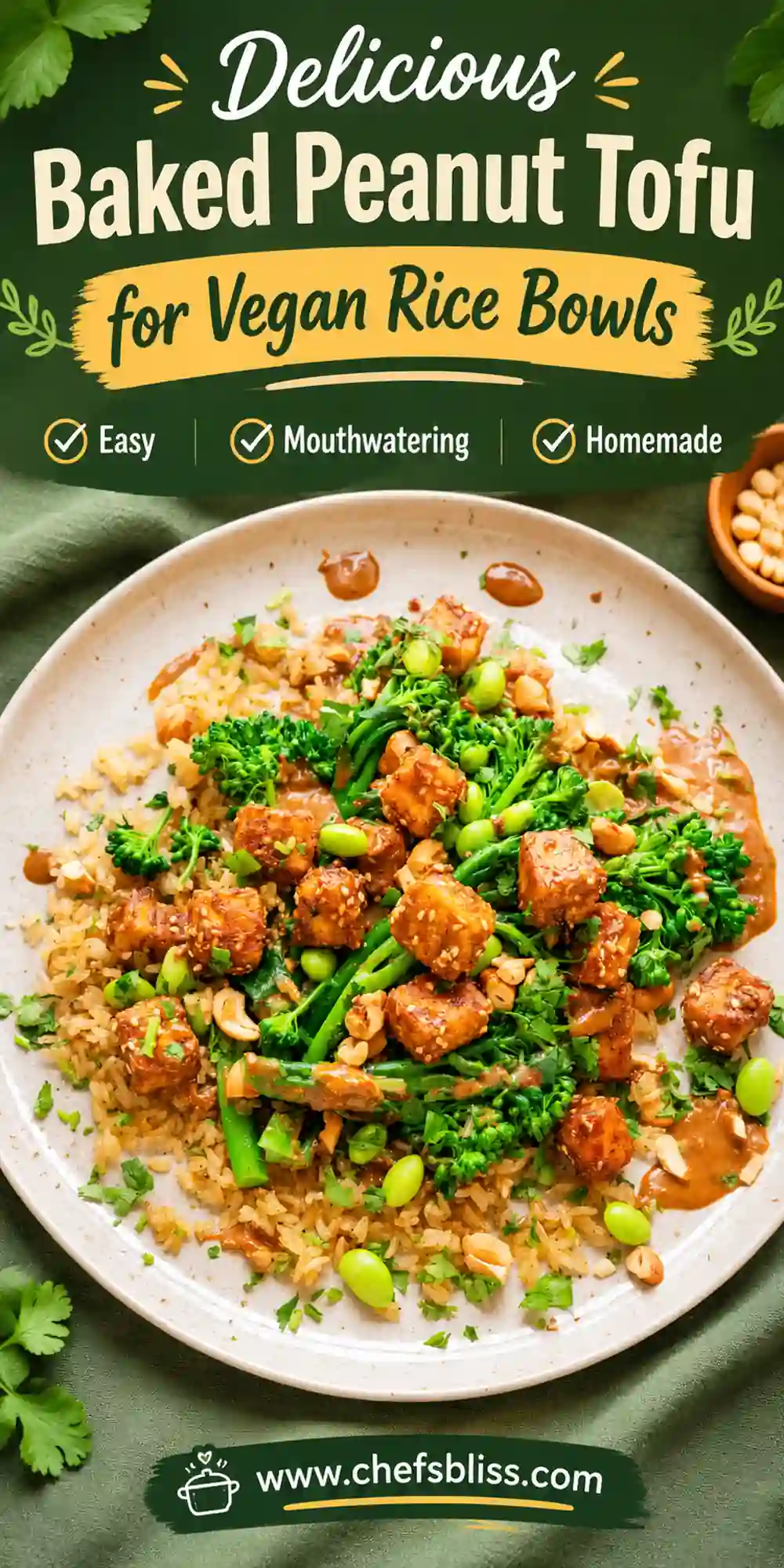
What makes this preparation particularly interesting is the two-stage baking method.
Rather than marinating the tofu before cooking, the recipe builds its exterior texture first and adds the peanut coating afterward.
Each bite offers a firm, lightly crisp exterior with a tender center and plenty of nutty flavor.
Finished with fresh cilantro, roasted cashews, and lime juice, this Southeast Asian-inspired tofu dinner is equally suitable for a family meal or a homemade vegan rice bowl.
The Secret Behind the Peanut-Coated Tofu
Moisture management is particularly important when cooking tofu. Excess surface moisture interferes with browning, while applying a thick sauce too early can prevent the exterior from developing sufficient firmness.
This recipe addresses those challenges by separating the cooking process into two stages:
- Initial high-temperature baking: Oil and potato starch help develop the tofu’s exterior.
- Lower-temperature finishing: The peanut coating sets around the partially cooked cubes without prolonged exposure to high heat.
The result is a substantial, flavorful tofu preparation that holds up beautifully alongside rice and vegetables.
Understanding the Ingredients
Extra-Firm Tofu
Extra-firm tofu has the structural strength needed to withstand cutting, tossing, baking, and coating. Softer varieties are more fragile and are not ideal for this particular preparation.
Potato Starch
Potato starch forms a thin surface coating that encourages crispness. It is different from potato flour, which contains additional components of the potato and behaves differently during cooking.
Creamy Peanut Butter
Smooth peanut butter helps produce a uniform coating. An unsweetened, unsalted variety gives you greater control over the finished sauce.
Tamarind Paste
Tamarind introduces acidity that balances the richness of the peanuts. Its distinctive fruity tartness works especially well with savory ingredients.
Tamari and Chili Sauce
These ingredients contribute saltiness, savory depth, and heat. Tamari is also a useful choice when preparing a gluten-free meal, provided the product is labeled accordingly.
Ground Coriander and Cinnamon
These spices introduce subtle citrusy and earthy undertones. Cinnamon is used sparingly so that it provides warmth without creating an overly sweet flavor.
Broccolini and Edamame
The green vegetables provide a refreshing contrast to the concentrated peanut coating. Edamame also contributes additional plant-based protein and texture.
Getting the Texture Right
Avoid cutting the tofu into noticeably different-sized pieces. Smaller pieces can dry out before larger ones develop their exterior.
When adding the starch, distribute it evenly rather than allowing it to collect in thick patches. A thin coating is preferable to a heavy, powdery crust.
Spacing also matters. If the tofu pieces touch or overlap on the baking sheet, escaping moisture can accumulate between them. Giving each cube adequate room encourages more even cooking.
When handling the blanched vegetables, remove excess water before assembly. Wet vegetables can dilute the peanut dressing and leave unwanted liquid at the bottom of the serving bowl.
Building a Balanced Dinner Bowl
You can approach the finished meal as a combination of contrasting flavors and textures:
| Component | Contribution |
|---|---|
| Baked peanut tofu | Nutty, savory centerpiece |
| Cooked rice | Mild, satisfying foundation |
| Broccolini | Fresh vegetal flavor |
| Edamame | Firm texture and protein |
| Roasted cashews | Crunch |
| Cilantro | Herbal freshness |
| Lime juice | Bright acidity |
| Peanut dressing | Creamy finish |
Distributing the components across individual bowls makes it possible to enjoy a combination of textures in every bite.
Helpful Preparation Tips
Organize Your Workspace
Measure the sauce ingredients before beginning. Keep the baking sheet, saucepan, mixing bowls, and vegetable preparation tools within reach.
Because several components are prepared simultaneously, having everything organized makes the cooking process considerably easier.
Adjust the Sauce Before Using It
Taste the peanut mixture before adding it to the tofu. Peanut butter and chili sauces vary considerably in sweetness, saltiness, and intensity between brands.
Making adjustments at this stage helps maintain a balanced finished dish.
Prepare the Rice in Advance
Using previously cooked rice can simplify preparation. Refrigerate cooked rice promptly after preparation and reheat it thoroughly before serving.
Serving Possibilities
Although rice makes an excellent foundation, baked peanut tofu can also inspire other plant-based meals.
Consider serving it with:
- Rice noodles or soba noodles.
- Shredded carrot and leftover rice.
- Blanched green beans or snap peas.
- Fresh vegetable grain bowls.
These are optional serving variations rather than modifications to the primary recipe.
Storage and Reheating
Refrigerate the tofu and vegetable mixture in separate airtight containers for approximately four days.
Warm the tofu in a lightly oiled nonstick skillet. Reheat the vegetables separately in a covered microwave-safe container or skillet. Add fresh garnishes immediately before serving.
Extra peanut sauce can be refrigerated for approximately one week.
Freezing instructions have not been established for this particular finished dish. Refrigeration is preferable when maintaining the intended vegetable and tofu textures.

Delicious Baked Peanut Tofu for Vegan Rice Bowls
Ingredients
Equipment
Method
- Step 1: Prepare the oven and baking sheet. Heat the oven to 425°F (220°C). Cover the rimmed baking sheet with parchment.
- Step 2: Remove excess tofu moisture. Divide the tofu lengthwise into four slabs. Enclose them in a kitchen towel, add a heavy weight, and press for 10–15 minutes only. If using a tofu press, leave the block whole.
- Step 3: Heat the vegetable cooking water. Set a large saucepan of water over high heat.
- Step 4: Mix the sauce. Whisk together all nine peanut sauce ingredients. Taste and adjust the saltiness, sweetness, acidity, or heat as needed.
- Step 5: Begin baking. Cut the tofu into ½–¾-inch cubes. Gently mix with the oil, 1 teaspoon kosher salt, and black pepper. Incorporate the starch, then arrange the pieces separately on the baking sheet. Bake for 20 minutes. Clean the mixing bowl and prepare an ice bath in it.
- Step 6: Blanch the vegetables. Add a generous tablespoon of kosher salt to the boiling water, followed by the broccolini and edamame. Partially cover and cook for approximately 3 minutes. The broccolini should retain some firmness. Drain, chill in the ice bath, and drain again. Towel-dry before tossing with the sesame oil and a few pinches of salt.
- Step 7: Finish the peanut tofu. Reduce the oven to 350°F (175°C). Using a bowl and silicone spatula, coat the tofu with half the peanut sauce, approximately ¼ cup (70 g). Add the roasted sesame seeds. Return the cubes to the baking sheet for 10 minutes, until their coating becomes somewhat dry.
- Step 8: Prepare the toppings. Add a few teaspoons of water to the reserved sauce, whisking until it flows easily. Chop the roasted nuts and cilantro. Warm the rice if necessary.
- Step 9: Assemble and serve. Finish the warm tofu with lime juice. Distribute the rice among four bowls, followed by the vegetables and some dressing. Add the tofu, cilantro, and nuts. Finish with the remaining dressing.
- Rainbow Plant Life
Notes
-
Salted peanut butter: Begin with 1 tablespoon of tamari rather than the full quantity, then adjust.
-
Tamarind substitute: Use 1–1½ tablespoons of fresh lime juice, adjusting to taste.
-
Spice level: Reduce the chili sauce for a milder dish. When substituting sriracha, reduce the sugar accordingly.
-
Sweetened nut butter: Begin with 2 teaspoons of sugar.
-
Peanut-free variation: Almond butter is an alternative for people who can safely consume almonds.
-
Nut-free variation: Sunflower seed butter may be used. Omit the nut garnish or substitute 2 tablespoons of roasted sesame seeds, provided sesame is safe for the intended diners.
-
Broccolini preparation: Split particularly thick stems lengthwise. Cutting stems into 3–4-inch sections is optional.
-
Broccoli substitute: Use approximately 14 ounces (400 g) of regular broccoli, separated into medium florets.
-
Extra edamame: Increase the amount to 12 ounces (340 g) if desired.
-
Gluten-free option: Choose certified gluten-free tamari or soy sauce and check the remaining packaged ingredients.
-
Allergens: The original formulation contains peanuts, soy, sesame, and tree nuts when cashews are used.
