
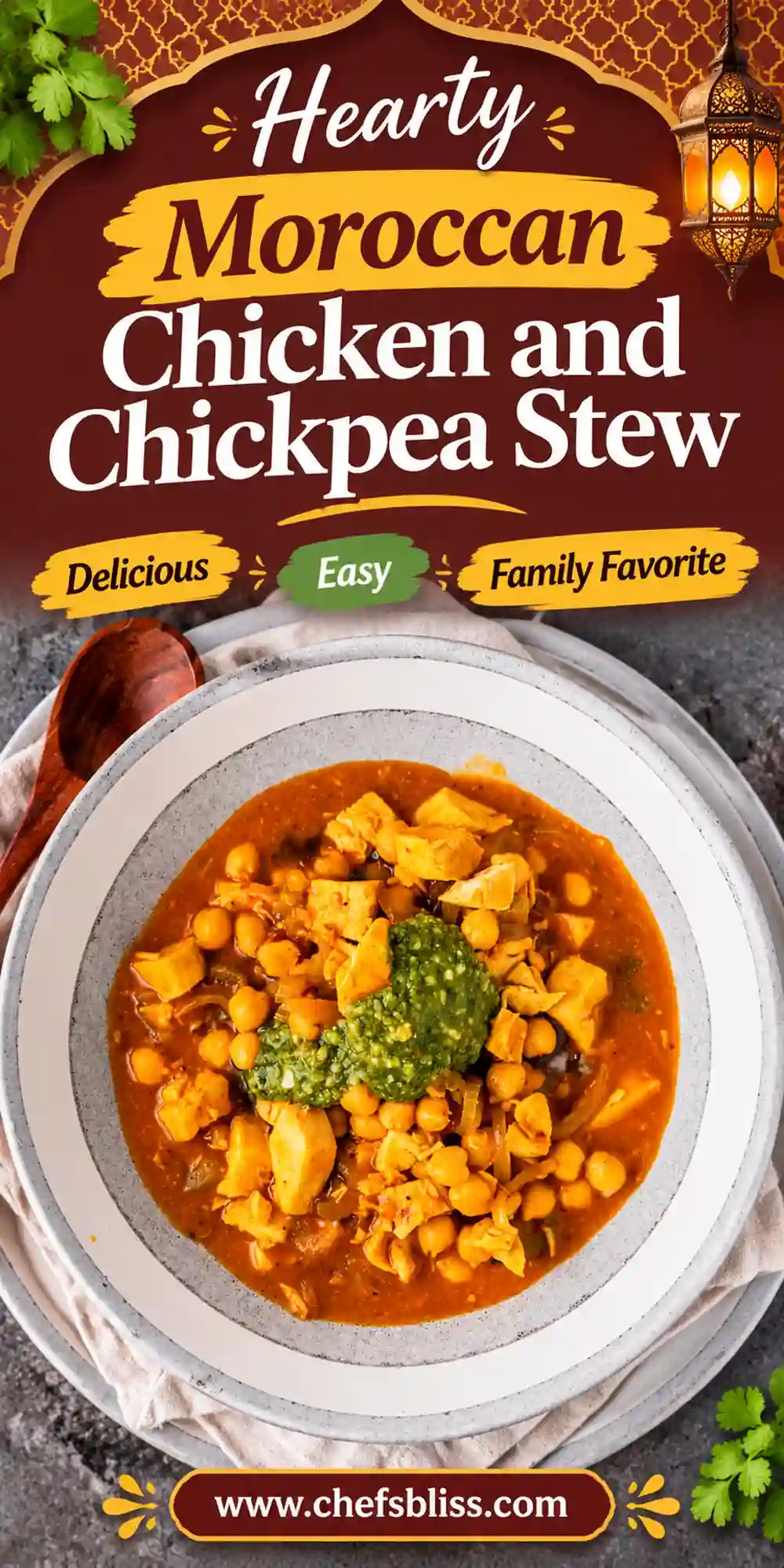
A generous bowl of Moroccan chicken stew brings together tender pieces of chicken, creamy chickpeas, aromatic spices, and a deeply savory tomato broth.
Harissa introduces a welcome kick of chili heat, while saffron lends a delicate floral aroma that makes the stew especially inviting.
Unlike slow-cooked stews that require several hours on the stove, this recipe develops its flavor through carefully timed layers of ingredients.
Everything comes together in one cooking pot, making it an appealing option for weeknight dinners, relaxed weekend meals, and comforting lunches.
A spoonful of pesto provides a fragrant, herbaceous finish that contrasts beautifully with the warm spices.
What Makes This Moroccan Chicken Stew So Flavorful?
The appeal of this stew lies in the balance between its earthy, spicy, savory, and aromatic ingredients.
Harissa provides complexity without requiring an extensive collection of individual spices. Chickpeas give the stew substance, while chicken breast contributes satisfying bites of lean meat.
Saffron introduces a subtle fragrance that complements the stronger seasonings without competing with them.
The cooking method creates a lightly thickened sauce rather than a thin, watery broth. It is substantial enough to enjoy on its own but equally suitable for serving over grains or alongside bread.
Understanding the Key Ingredients
Chicken Breast
Chopped chicken breast cooks directly in the seasoned liquid, allowing it to absorb flavor without requiring a separate browning step.
Cut the chicken into similarly sized, bite-sized pieces so they cook evenly. Excessively large pieces may require additional simmering.
Chickpeas
Cooked chickpeas, also known as garbanzo beans, provide a soft interior, mild nutty flavor, and satisfying texture.
Canned chickpeas are particularly convenient because they are already cooked. Drain them before adding them to the stew.
Harissa Paste
Harissa is a North African chili condiment that contributes heat and concentrated pepper flavor. Its intensity varies considerably between brands and preparations.
Use harissa paste rather than dry harissa seasoning to maintain the intended consistency and flavor balance.
Saffron
Saffron brings a distinctive fragrance and golden undertones to the cooking liquid. Crushing and soaking the threads before cooking helps distribute their flavor throughout the stew.
White Onion and Celery
These vegetables form the aromatic foundation. Thinly sliced onion softens into the sauce, while finely chopped celery contributes an earthy freshness that balances the richer ingredients.
Tomato Paste
Concentrated tomato paste adds savory depth, acidity, and richness without introducing excessive liquid.
Ground Cumin, Garlic Powder, Salt, and Black Pepper
This straightforward seasoning combination complements the complex flavor of harissa. Cumin is especially useful for adding an earthy warmth that pairs naturally with chickpeas.
Butter and Olive Oil
The combination of cooking fats provides richness and helps soften the aromatic vegetables.
Ghee is an alternative to butter in the original formulation.
Flour and Chicken Stock
Flour gives the broth enough body to lightly coat the chicken and chickpeas. Chicken stock supplies the liquid needed to create the sauce and finish cooking the meat.
Pesto
Although pesto is not a traditional Moroccan stew ingredient, its fresh herbal character works well against the concentrated tomato and chili flavors. It also provides an attractive contrast when spooned over the finished dish.
The garnish can be omitted if you prefer a simpler Moroccan-inspired presentation.
Preparing the Ingredients Before Cooking
This stew moves relatively quickly once the vegetables begin cooking. Having the ingredients measured and prepared beforehand makes the process more manageable.
Start by crushing the saffron and placing it in cold water. While it steeps, prepare the onion, celery, and chicken.
For the onion, peel it, halve it lengthwise, and slice it into thin strips. Chop the celery finely and cut the chicken into even pieces.
Drain the canned chickpeas, measure the seasonings, and keep the stock within reach. Use a separate cutting board for raw chicken or thoroughly wash and sanitize your cutting board before preparing other ingredients.
How to Make Moroccan Chicken Stew
Step 1: Prepare the Saffron Infusion
Gently crush the saffron threads between your fingertips and place them in a small bowl containing 2 tablespoons of cold water.
Allow the saffron to steep for approximately 15 minutes while you prepare the remaining ingredients.
Step 2: Develop the Aromatic Base
Set a Dutch oven over medium-high heat and add the butter and olive oil.
Once the butter has melted, introduce the sliced onion and salt. Cook for 4 minutes, stirring as needed.
Add the chopped celery, cumin, garlic powder, and black pepper. Continue cooking for another 6 minutes, allowing the vegetables to soften and the seasonings to become fragrant.
Step 3: Incorporate the Harissa and Tomato
Stir the tomato paste and harissa into the vegetables.
Pour in the saffron infusion, including the threads and soaking liquid. Cook for 1 minute, stirring to distribute the concentrated seasonings throughout the mixture.
Step 4: Build the Stew’s Sauce
Reduce the heat to low and scatter the flour evenly over the vegetables.
Stir continuously enough to prevent pockets of dry flour, cooking for 2 minutes.
Add the chicken stock and mix until the flour is incorporated. Continue cooking for another 2 minutes as the liquid begins to develop a thicker consistency.
Step 5: Simmer the Chicken and Chickpeas
Add the cooked chickpeas and chopped raw chicken breast.
Stir well so the ingredients are evenly distributed throughout the sauce. Cover the pot and maintain a gentle simmer for 15 minutes.
Check that the chicken is fully cooked before removing the stew from the heat. The thickest pieces should register at least 165°F on an instant-read thermometer.
Step 6: Finish with Pesto
Divide the hot stew among four serving bowls.
Place 1 tablespoon of pesto over each portion and serve immediately. Diners can swirl the pesto into the sauce as they eat.
Getting the Stew’s Consistency Just Right
This Moroccan chicken stew should have a substantial, spoonable consistency, with enough liquid to surround the chicken and chickpeas.
The flour is important because it helps transform the seasoned stock into a cohesive sauce. Cooking the flour before introducing the stock reduces the likelihood of an unpleasant raw flour taste.
Once the chicken is added, keep the pot covered and avoid a rolling boil. A gentle simmer helps limit excessive evaporation and prevents the lean chicken breast from becoming unnecessarily tough.
If the stew becomes thicker than desired, an additional small splash of warm stock can loosen it. This is an optional troubleshooting adjustment rather than part of the original formula.
Practical Tips for the Best Results
- Taste the harissa beforehand: Different products can have significantly different heat levels.
- Allow the saffron to steep: Adding dry threads directly to the pot may result in less even flavor distribution.
- Slice the vegetables thinly: Smaller pieces soften more efficiently during the relatively short cooking process.
- Cook the flour thoroughly: Give it the prescribed cooking time before incorporating the stock.
- Avoid overcooking the chicken: Check its internal temperature rather than extending the simmer unnecessarily.
- Add the pesto just before serving: This preserves its fresh fragrance and contrasting color.
Ingredient Substitutions and Optional Variations
The original combination offers a carefully balanced stew, but the following alternatives provide flexibility when particular ingredients are unavailable.
| Original ingredient | Possible substitute |
|---|---|
| Butter | Ghee |
| Regular flour | Chickpea flour |
| Canned chickpeas | Fully cooked dried chickpeas |
| Chicken stock | Chicken broth or vegetable stock |
| Raw chicken breast | Cooked, chopped rotisserie chicken |
| Tomato paste | Three times the quantity of tomato puree or tomato sauce |
When using cooked rotisserie chicken, reduce the final simmer to 10 minutes.
For additional vegetables, consider carrots, spinach, sweet potatoes, or parsnips. Fresh cilantro or parsley could also provide an alternative finishing garnish.
These vegetable additions are optional variations and may require adjustments to cooking time or liquid quantities. Their exact proportions have not been independently tested here.
What to Serve with Moroccan Chicken Stew
The rich stew works particularly well with accompaniments that absorb its flavorful sauce.
Couscous: Its light, fluffy texture provides a pleasant contrast to the substantial chickpeas and chicken.
Warm pita bread: Ideal for scooping up the vegetables and enjoying every bit of the thickened broth.
Steamed rice: A mild accompaniment that helps balance the heat of the harissa.
Simit: This sesame-coated bread adds a contrasting nutty flavor and chewy texture.
Fattoush salad: Crisp vegetables and a tangy dressing create a refreshing counterpoint to the warm stew.
Roasted vegetables: A simple vegetable side can turn the stew into a more substantial family dinner.
Making the Stew Ahead and Storing Leftovers
This recipe is suitable for preparing in advance because its chicken, chickpeas, and aromatic sauce can be stored together.
For best results, keep the pesto separate until serving.
Refrigerating
Transfer leftovers to shallow, airtight containers and refrigerate within two hours of cooking. Store for up to 3–4 days at 40°F or below.
Freezing
As a general make-ahead option, freeze the cooled stew without the pesto in freezer-safe containers for up to 2–3 months for best quality.
Leave some space at the top of each container for expansion. Thaw overnight in the refrigerator before reheating.
Reheating
Warm the stew in a saucepan over medium-low heat, stirring periodically to distribute the heat evenly.
If necessary, add a small amount of stock or water to restore the desired consistency. Reheat leftovers to 165°F and finish with pesto immediately before serving.
These recommendations follow conservative food safety guidance from the USDA on leftovers and food safety.
Frequently Asked Questions
Is Moroccan chicken stew very spicy?
The heat depends primarily on the harissa paste. Some varieties are moderately spicy, while others have a much stronger chili flavor. Taste your harissa before cooking to understand its intensity.
Can I use dried chickpeas instead of canned chickpeas?
Yes. Soak and fully cook the dried chickpeas beforehand, then measure 3½ cups of cooked chickpeas. Uncooked dried chickpeas will not become tender during the stew’s short simmering time.
Do I need to brown the chicken first?
No. The original cooking method involves simmering the raw chicken directly in the prepared sauce. This eliminates a separate frying step.
Can I make Moroccan chicken stew gluten-free?
Chickpea flour is an alternative thickener included in the original recipe. Also verify that your stock, harissa, pesto, and other packaged ingredients are gluten-free.
Can I make this stew without pesto?
Yes. Pesto is an optional finishing ingredient that provides freshness and additional richness. The stew has plenty of flavor from its saffron, harissa, tomato paste, and aromatic vegetables without it.

Hearty Moroccan Chicken and Chickpea Stew
Ingredients
Equipment
Method
- Steep the saffron: Crush the saffron threads into a small bowl with the cold water. Leave for 15 minutes while preparing the other ingredients.
- Soften the onion: Heat butter and olive oil in the Dutch oven over medium-high heat. Add onion and salt once the butter melts. Cook for 4 minutes.
- Cook the remaining aromatics: Mix in celery, cumin, garlic powder, and pepper. Cook for 6 minutes.
- Season the base: Incorporate tomato paste, harissa, and the entire saffron infusion. Stir over the heat for 1 minute.
- Thicken the liquid: Lower the heat. Work the flour into the vegetables and cook for 2 minutes. Stir in the stock and cook for another 2 minutes.
- Finish cooking: Mix in chickpeas and raw chicken. Cover and simmer gently for 15 minutes, checking that the chicken reaches 165°F.
- Serve: Portion into four bowls: Finish each serving with 1 tablespoon of pesto.
Notes
-
Ghee may replace butter without changing the specified cooking sequence.
-
Chickpea flour can be used instead of regular flour.
-
Dried chickpeas must be fully cooked before measuring and adding them.
-
For cooked rotisserie chicken, shorten the covered simmer to 10 minutes.
-
Harissa heat varies by brand.
-
Pesto may be omitted.
-
Refrigerate leftovers for up to 3–4 days and reheat to 165°F.
-
The original recipe lists a 25-minute cooking time and 40-minute total time. However, its individual cooking stages add up to approximately 30 minutes, excluding initial heating. Allow around 45 minutes overall while maintaining the specified cooking durations.
-
The original ingredient quantities and cooking sequence are based on Kevin’s recipe at Silk Road Recipes. The storage recommendations have been adjusted to follow USDA food safety guidance.
