
A homemade veggie burger should be every bit as satisfying as the toppings piled onto it.
These vegan black bean burgers deliver a generous, hearty patty with a beautifully browned exterior, a tender center, and plenty of savory flavor.
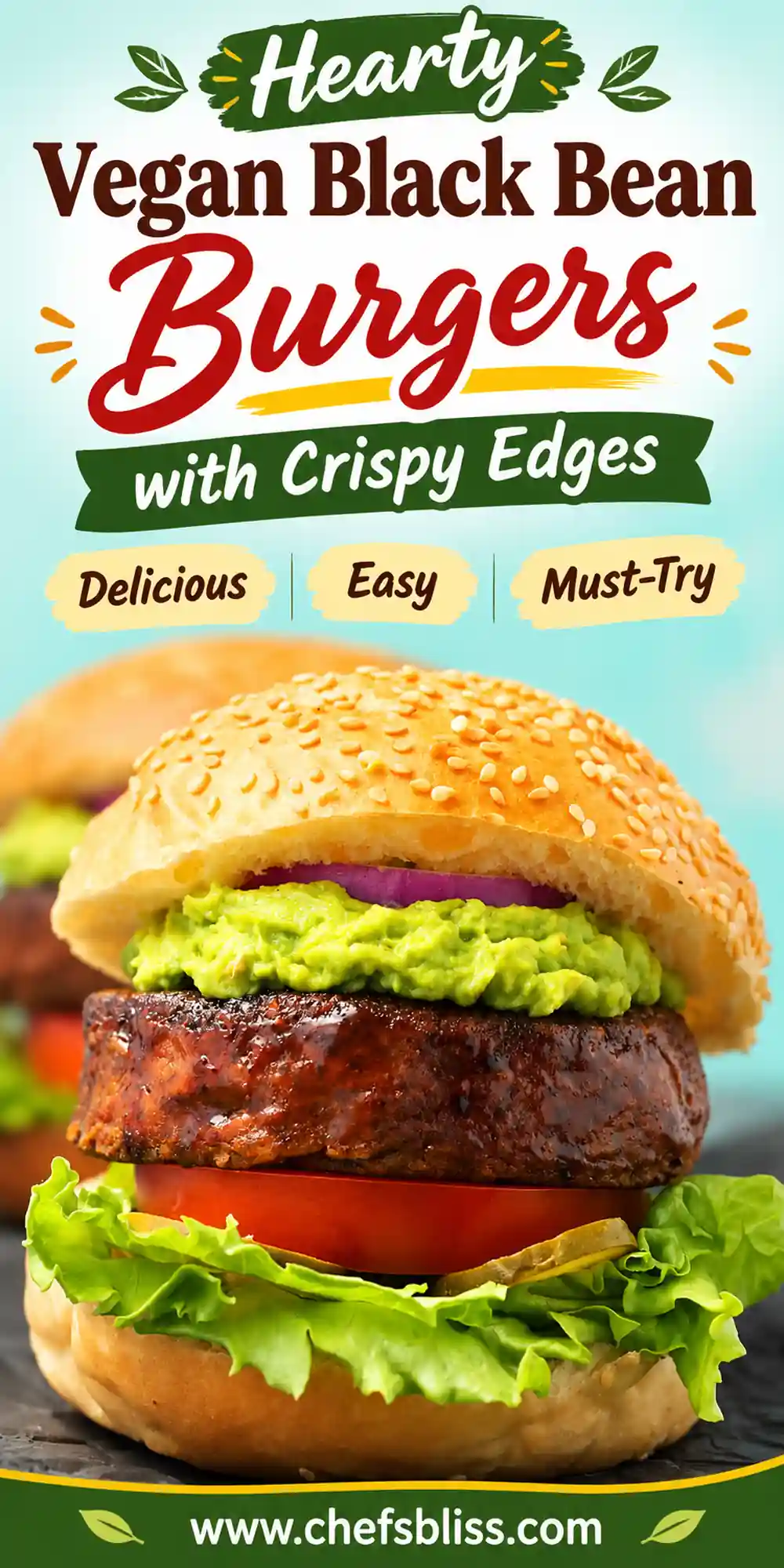
Black beans create a substantial base, while walnuts bring richness and texture.
Smoked paprika, cumin, coriander, and tomato paste build layers of earthy, smoky flavor that complement the lightly caramelized barbecue coating.
You don’t need eggs, dairy, or specialty meat substitutes to prepare these plant-based burgers.
Serve them with creamy guacamole, crunchy lettuce, juicy tomatoes, and tangy pickles for a satisfying lunch or dinner.
They’re especially appealing for family burger nights, meatless Mondays, summer cookouts, and make-ahead meals.
What Makes a Great Homemade Black Bean Burger?
The challenge with homemade bean burgers is finding the right balance between moisture, structure, and flavor. A mixture that’s too moist can become difficult to handle, while an excessively dry mixture can produce an unpleasantly dense patty.
This recipe addresses those challenges through several complementary ingredients and preparation techniques.
- Black beans: Provide substance, moisture, fiber, and plant-based protein.
- Walnuts: Introduce texture and natural richness without relying on animal fats.
- All-purpose flour: Helps bind the ingredients into a cohesive mixture.
- Aromatic vegetables: Create a savory foundation that complements the beans.
- Ground spices: Give the patties a warm, earthy, and subtly smoky character.
- Vegan barbecue sauce: Adds a glossy, tangy finishing layer.
The result is a substantial vegetable burger with its own distinctive flavor rather than an imitation of a traditional beef patty.
Ingredients and Their Roles
Black Beans
Canned black beans are a convenient choice because they’re already cooked and tender. Their mild, earthy flavor works particularly well with smoky seasonings.
Rinse the beans thoroughly and allow the excess water to drain before preparing the burger mixture. Excess moisture can interfere with the consistency of the patties.
Walnuts
Walnuts contribute both richness and small pieces of texture throughout the burgers. Their slightly earthy flavor complements the black beans without overwhelming the seasonings.
Avoid processing them into walnut butter. The goal is a crumbly consistency that can be evenly distributed throughout the mixture.
Onion and Garlic
Fresh onion and garlic provide the aromatic foundation. Cooking these ingredients before combining them with the beans helps mellow their sharper flavors.
White, yellow, or brown onions are suitable for this recipe.
Olive Oil
Olive oil is used at two different stages. A smaller quantity helps soften the aromatics, while the remaining oil promotes even browning during frying.
Smoked Paprika, Cumin, and Coriander
These three spices create the principal flavor profile.
Smoked paprika supplies a gentle smokiness, cumin provides earthy warmth, and ground coriander introduces a subtle citrus-like complexity.
Onion Powder and Garlic Powder
These seasonings reinforce the savory character of the cooked aromatics and distribute flavor throughout the patties.
Tomato Paste
Concentrated tomato paste contributes umami, mild acidity, and depth. Its thick consistency makes it particularly useful in a mixture where excess liquid is undesirable.
All-Purpose Flour
Flour serves as the primary binding ingredient. Its ability to absorb moisture helps create patties that are easier to shape and transfer.
Vegan Barbecue Sauce
Barbecue sauce provides a flavorful exterior finish, balancing the earthy beans and walnuts with sweet, smoky, and tangy notes.
Check the ingredient label to ensure that your chosen sauce is vegan.
Equipment for Preparing Black Bean Burgers
You can prepare these homemade veggie burgers with ordinary kitchen equipment.
- Food processor
- Large mixing bowl
- Cutting board
- Kitchen knife
- Measuring cups and spoons
- Colander or mesh strainer
- Large frying pan or skillet
- Baking sheet
- Spatula
- Pastry brush
- Parchment paper
- Flat-bottomed drinking glass or round cutter
A sufficiently wide skillet is helpful when cooking several burgers at once. Crowding the pan can make turning the patties more difficult.
How to Make Vegan Black Bean Burgers
Step 1: Prepare the Walnuts and Aromatics
Pulse the walnuts in a food processor until crumbly, then reserve them in a bowl.
Cook the onion and garlic in one tablespoon of olive oil until the onion softens.
Step 2: Create the Seasoned Bean Base
Purée the cooked aromatics, drained beans, tomato paste, spices, salt, and pepper in the food processor.
Step 3: Form the Burger Mixture
Combine the bean purée, walnuts, and flour. Adjust the flour if the mixture is excessively moist.
Shape four equal patties on a flour-dusted baking sheet, using additional flour for handling as necessary.
Step 4: Firm Up the Patties
Freeze the shaped burgers for 30 minutes before cooking. This resting period helps stabilize their structure.
Step 5: Fry and Glaze
Heat the remaining olive oil in a skillet. Cook each side for five minutes, applying the barbecue sauce to the exposed surface and edges after turning.
Step 6: Assemble and Serve
Transfer the finished patties to hamburger buns and finish with your favorite toppings. Loving It Vegan
Getting the Texture Right
Unlike a conventional meat burger, a homemade bean patty relies on the consistency of its mixture rather than the natural binding properties of meat proteins.
Pay particular attention to the following details.
Control Moisture Before Mixing
Allowing water to collect in the bean mixture makes it harder to produce uniform patties.
A properly balanced mixture should be pliable enough to shape without becoming excessively sticky or flowing out of shape.
Keep the Patty Thickness Consistent
Evenly sized burgers cook more predictably. If one patty is significantly thicker than another, their finished textures may differ.
Try to maintain an even thickness across each burger, particularly around the edges.
Be Patient When Turning
Resist the temptation to repeatedly lift, press, or reposition the burgers while they cook.
Allowing the first side to develop a crust makes it easier to slide a spatula underneath without damaging the patty.
Understand the Finished Texture
These burgers have a naturally tender interior. They are not intended to reproduce the dense, chewy texture of a commercial meat substitute.
The contrast between the browned surface and softer bean filling is part of their appeal.
Optional Substitutions and Variations
| Variation | Preparation consideration |
|---|---|
| Home-cooked black beans | Use 1½ cups instead of canned beans. |
| Gluten-free burgers | A gluten-free all-purpose flour blend is an untested substitution for this specific recipe. |
| Thinner patties | Divide the mixture into six portions instead of four for a greater proportion of crispy exterior. |
| Homemade barbecue sauce | Use a vegan barbecue sauce in place of a bottled version. |
The original recipe can also be prepared on a grill, although no specific grill temperature or separate grilling duration is provided by the developer.
Build a Better Vegan Burger
The smoky, savory patties pair especially well with toppings that introduce contrasting temperatures, textures, and flavors.
A classic combination includes lettuce for freshness, pickles for acidity, sliced tomatoes for juiciness, guacamole for creaminess, and red onion for a little sharpness.
For a different serving experience, consider these optional combinations:
- Southwestern style: Guacamole, jalapeños, shredded lettuce, and salsa.
- Barbecue style: Vegan coleslaw, pickles, and additional barbecue sauce.
- Classic diner style: Vegan mayonnaise, tomato, lettuce, and sliced onion.
- Burger bowl: Chopped lettuce, fresh vegetables, a bean patty, and your preferred vegan dressing.
- Bunless burger: Serve the patty between large lettuce leaves.
These serving combinations are optional suggestions rather than changes to the original patty formulation.
Side Dishes That Pair Well with Black Bean Burgers
A substantial homemade veggie burger makes an excellent centerpiece for a casual plant-based meal.
For a traditional burger-night dinner, serve it with oven-baked potato fries or crispy potato wedges. Sweet potato fries offer a sweeter contrast to the smoky seasonings.
A crunchy vegan coleslaw brings refreshing acidity, while a cucumber and tomato salad creates a lighter accompaniment.
Other suitable pairings include roasted corn, grilled vegetables, mixed green salad, and dairy-free potato salad.
Make-Ahead Preparation, Storage, and Reheating
These black bean patties lend themselves well to preparing meals in advance.
Refrigerating
Store leftover patties in a covered container in the refrigerator for three to four days. Keep the buns and fresh toppings separate to prevent sogginess.
Freezing
Both cooked and uncooked patties can be frozen. Parchment paper between individual burgers is a useful way to keep them separated.
Reheating
Thaw frozen patties overnight in the refrigerator or cook them directly from frozen, allowing additional cooking time. A skillet or grill can be used to warm them thoroughly.
Frequently Asked Questions
Are vegan black bean burgers a good source of protein?
Black beans and walnuts both contribute plant-based protein, making these burgers a satisfying component of a meatless meal.
Their overall nutritional profile will also depend on the buns, toppings, and accompanying side dishes.
Are these black bean burgers naturally gluten-free?
No. The original formulation contains wheat-based all-purpose flour. A gluten-free version would require an appropriate alternative flour, gluten-free buns, and compatible condiments.
Are these burgers suitable for people with nut allergies?
No. Walnuts are a principal ingredient. A reliable nut-free replacement has not been established for this formulation.
Do I need eggs to bind black bean burgers?
No. This recipe uses flour and the natural consistency of processed beans to create its structure without eggs.
Can I serve black bean burgers without hamburger buns?
Absolutely. Serve them over salad greens, alongside roasted vegetables, or as part of a grain bowl for a different presentation.

Hearty Vegan Black Bean Burgers with Crispy Edges
Ingredients
Equipment
Method
- Grind the walnuts: Pulse them into coarse crumbs and place them in a mixing bowl.
- Sauté the aromatics: Cook the onion and garlic in 1 tablespoon of olive oil until softened.
- Process the beans: Blend the aromatics, beans, five ground spices, tomato paste, salt, and pepper until smooth.
- Combine: Mix the purée with the walnuts and flour. Incorporate extra flour if excessively wet.
- Shape: Dust a baking sheet with flour. Divide the mixture into quarters and flatten each portion using a parchment-covered glass base or round cutter. Flour the surfaces as needed.
- Chill: Place the baking sheet in the freezer for 30 minutes.
- Cook: Heat 2 tablespoons of olive oil until hot. Fry the patties for 5 minutes, turn once, then brush their upper surfaces and edges with barbecue sauce. Cook for another 5 minutes. Work in batches if necessary.
- Serve: Assemble the burgers with buns, lettuce, pickles, tomato, guacamole, and red onion.
Notes
-
Drain the black beans thoroughly to minimize excess moisture.
-
Up to another 2 tablespoons of flour may be needed, depending on the mixture’s consistency.
-
Additional flour for dusting and shaping is not included in the measured ½ cup.
-
Avoid unnecessary turning during frying.
-
The standard recipe produces four thick patties.
-
Cooking in separate batches will increase the overall cooking duration.
-
Check that the hamburger buns and barbecue sauce contain no animal-derived ingredients.
-
The original recipe lists a 30-minute total that excludes freezer time. The 60-minute total above includes the required chilling period.
