
Blueberry clafoutis brings together the richness of a baked custard and the bright, fruity sweetness of fresh blueberries in one beautifully simple French dessert.
Delicately flavored with vanilla bean, lemon zest, and almond extract, each slice offers a tender, creamy interior filled with juicy berries and surrounded by lightly golden edges.
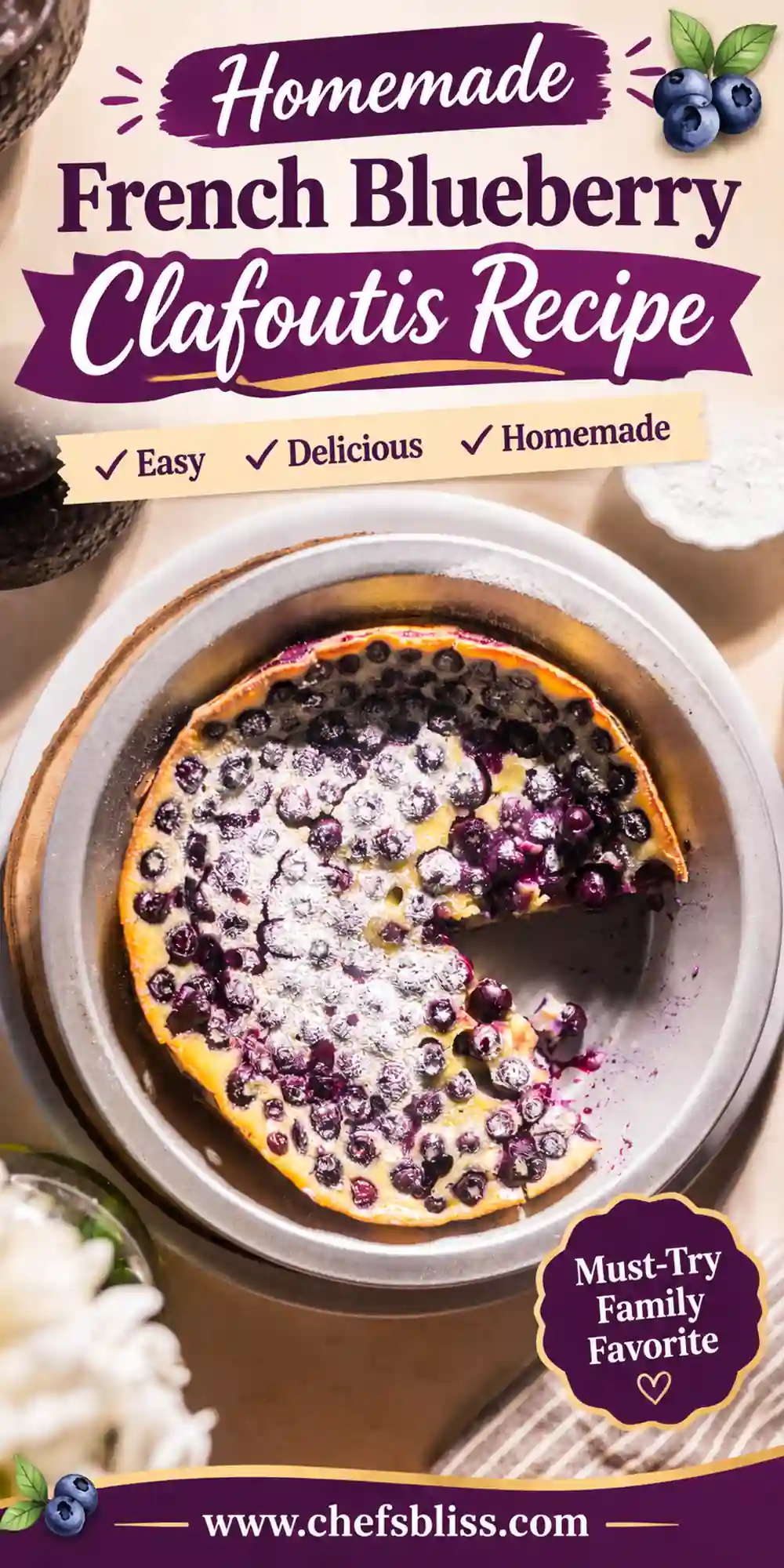
Unlike traditional fruit pies or tarts, clafoutis requires no pastry crust, rolling, or complicated assembly.
A simple flour-and-egg batter provides enough structure to hold the fruit while maintaining a soft, custard-like consistency.
It’s an elegant way to enjoy summer blueberries, whether you’re preparing dessert for a dinner party, hosting a weekend brunch, or craving something sweet to accompany your afternoon coffee.
What Is Blueberry Clafoutis?
Clafoutis is a traditional French baked dessert originating in the Limousin region of France. The classic preparation features cherries surrounded by a pourable batter made with eggs, flour, sugar, and dairy.
Blueberry clafoutis offers a seasonal interpretation of this traditional dessert. As the batter cooks, the eggs and flour create a delicate structure that holds the berries in place.
The finished dessert falls somewhere between a baked custard, a soft pancake, and a crustless fruit tart. It has enough firmness to be sliced but remains considerably softer and creamier than a conventional cake.
The combination of blueberries and lemon introduces a pleasant fruitiness that balances the richness of the dairy and eggs.
How the Ingredients Create the Perfect Custard
Fresh Blueberries
Fresh blueberries provide the main fruit flavor. Choose plump, firm berries without visible mold or excessive moisture.
Both cultivated and wild blueberries are suitable for this recipe. Wild blueberries are generally smaller, while cultivated varieties tend to produce larger pockets of juicy fruit.
Eggs and All-Purpose Flour
Eggs provide the foundation of the custard, while all-purpose flour helps stabilize the batter during baking.
Unlike a traditional cake, this recipe does not require baking powder or baking soda. The goal is a tender, cohesive dessert rather than an airy cake crumb.
Whole Milk and Heavy Cream
Whole milk keeps the batter fluid enough to surround the blueberries evenly, while heavy cream contributes richness and a smooth mouthfeel.
The balance between these two dairy ingredients helps prevent the dessert from becoming excessively heavy.
Vanilla Bean and Almond Extract
Freshly scraped vanilla seeds distribute aromatic flavor throughout the batter. A small quantity of almond extract introduces a complementary nutty fragrance without overwhelming the blueberries.
Lemon Zest
Lemon zest contains aromatic citrus oils that brighten the flavor of the fruit. Use only the yellow outer portion of the peel, avoiding the bitter white pith underneath.
Unsalted Butter
Melted butter enriches the custard batter, while additional butter creates a nonstick coating inside the baking dish.
Granulated and Powdered Sugar
Granulated sugar sweetens both the fruit and the custard. Powdered sugar provides a delicate finishing touch just before serving.
Ingredients You’ll Need
| Ingredient | Quantity |
|---|---|
| Unsalted butter, melted | 1 tablespoon |
| Additional unsalted butter | For greasing |
| Fresh blueberries | 1 pint |
| Granulated white sugar | ⅓ cup plus 1 tablespoon, divided |
| Lemon | 1, zested |
| Vanilla bean | ½ |
| Large eggs | 3 |
| Kosher salt | ⅛ teaspoon |
| Almond extract | ¼ teaspoon |
| All-purpose flour | ⅔ cup |
| Heavy cream | ½ cup |
| Whole milk | ¾ cup |
| Powdered sugar | For dusting |
Choosing the Right Baking Dish
A 9-inch round ceramic or oven-safe glass pie dish is an excellent choice for blueberry clafoutis. A 9-inch cast-iron skillet is also suitable.
Some reactive metal pans may introduce an unpleasant metallic flavor when exposed to acidic fruit. Ceramic and glass are particularly practical options for this dessert.
Keeping the specified pan diameter also helps maintain the intended batter depth and cooking time.
How to Make Blueberry Clafoutis
Step 1: Prepare the Oven and Baking Dish
Position an oven rack in the center and preheat the oven to 350°F (177°C).
Coat the inside of a 9-inch round baking dish with softened unsalted butter, covering the base and sides.
Step 2: Season the Blueberries
Place the fresh blueberries in a mixing bowl. Add 1 tablespoon of granulated sugar and the zest of one lemon.
Gently combine without crushing the berries. Set the mixture aside while preparing the batter.
Step 3: Extract the Vanilla Seeds
Split the half vanilla bean lengthwise with a paring knife. Open the pod and scrape out the tiny seeds using the knife blade.
Transfer the seeds to a large blender container.
Step 4: Begin Mixing the Custard
Add the remaining ⅓ cup sugar, eggs, melted butter, kosher salt, almond extract, and all-purpose flour to the container.
Stir with a whisk or fork until the ingredients are incorporated.
Step 5: Incorporate the Dairy
Add the heavy cream and whole milk, whisking briefly before blending.
Process the mixture with an immersion blender or countertop blender until smooth and aerated. Ensure that no visible pockets of dry flour remain.
Step 6: Assemble the Clafoutis
Spread the prepared blueberries across the buttered dish.
Pour the custard mixture gradually over the fruit, distributing it throughout the pan.
Step 7: Bake Until Just Set
Bake for 30–35 minutes.
Begin monitoring the custard at the 25-minute mark, checking at five-minute intervals as necessary. Look for golden edges, a gently trembling center, and a clean toothpick when inserted into the middle.
Step 8: Cool and Finish
Rest the baked dessert for 10–15 minutes. Sift powdered sugar over the surface, slice, and serve while pleasantly warm.Home Cooking Collective
Understanding the Texture of a Properly Baked Clafoutis
Clafoutis requires a different approach to doneness than cakes, muffins, or quick breads. Its relatively high proportion of eggs and dairy means that the finished interior should retain some softness.
When checking the dessert, gently move the baking dish. The central portion may move slightly as a single mass, but there should not be visibly liquid batter flowing beneath the surface.
The perimeter will generally become firmer before the center because it receives heat from both the oven and the baking dish.
Removing the clafoutis at the correct stage is important. Excessive heat causes egg proteins to tighten, potentially producing a chewy or rubbery consistency instead of a delicate custard.
The resting period allows the dessert to stabilize further before slicing.
Small Details That Make a Difference
| Potential problem | How to prevent it |
|---|---|
| Rubbery custard | Avoid extending the baking time unnecessarily. |
| Flour lumps | Blend thoroughly after incorporating the dairy. |
| Metallic aftertaste | Choose a nonreactive baking dish. |
| Unevenly distributed fruit | Arrange the blueberries before adding the batter. |
| Bitter citrus flavor | Avoid grating the white lemon pith. |
| Difficult slicing | Allow the custard to rest before cutting. |
A few surface cracks are not necessarily a sign that something has gone wrong. Custard-based desserts can expand during baking and contract slightly as they cool.
Ingredient Substitutions and Flavor Variations
The original ingredient combination is recommended for the intended flavor and consistency. However, the recipe developer also provides several alternatives.
| Original ingredient | Alternative |
|---|---|
| ½ vanilla bean | 1 teaspoon vanilla extract |
| Almond extract | May be omitted |
| Fresh blueberries | Cherries, raspberries, or blackberries |
| Whole milk and heavy cream | Whole milk or 2% milk in place of the dairy combination |
Different fruits release varying amounts of liquid during baking, which may affect the final firmness.
Can You Make Blueberry Clafoutis Dairy-Free?
The original recipe developer suggests plant-based milk and either full-fat coconut milk or plant-based heavy cream as possible alternatives. These substitutions have not been confirmed through testing by the developer.
A dairy-free version would also require replacing the butter, which introduces another untested modification.
For predictable results, use the original dairy ingredients.
Serving Blueberry Clafoutis
This dessert is especially appealing when served warm, with its creamy interior contrasting against the juicy berries.
For a more elaborate presentation, consider serving individual slices with optional accompaniments such as:
- Lightly whipped cream
- Vanilla ice cream
- Fresh blueberries or raspberries
- Crème fraîche
- Plain Greek yogurt
- Hot coffee or French breakfast tea
These are additional serving suggestions rather than ingredients in the original recipe.
For brunch, a modest slice can accompany fresh fruit and coffee. For an evening gathering, serve it directly from an attractive ceramic baking dish with a sprinkling of powdered sugar.
Refrigerating and Reheating Leftovers
Refrigerate leftovers in a sealed container or beneath a tight covering of plastic wrap. They will keep for 3–4 days.
Microwave individual portions in 30-second intervals until sufficiently warm.
The dessert can also be enjoyed chilled if you prefer a firmer custard texture.
Freezing is not recommended as the preferred storage method because thawing egg-based custards can affect their smooth texture. The original recipe does not provide a tested freezing method.
Frequently Asked Questions
Is blueberry clafoutis the same as a blueberry cobbler?
No. Cobbler generally features a biscuit-like or cake-like topping over fruit. Clafoutis surrounds the fruit with an egg-based batter that develops a custard consistency during baking.
Can I prepare clafoutis without a stand mixer?
Yes. A whisk and either an immersion blender or countertop blender are sufficient. A stand mixer is unnecessary.
Can I use frozen blueberries?
The original formula specifies fresh blueberries. Frozen berries may release additional water and change the setting characteristics of the custard.
Their use has not been established for this particular formula, so fresh blueberries remain the recommended choice.
Why does clafoutis contain flour?
The flour provides additional structure to the egg custard, allowing the dessert to hold its shape when sliced without requiring a pastry shell.
Does clafoutis need a water bath?
No. This recipe uses direct oven baking in a buttered dish. No water bath or additional baking vessel is required.

Homemade French Blueberry Clafoutis Recipe
Ingredients
Equipment
Method
- Preheat the oven: Set the oven to 350°F (177°C) with a rack positioned in the middle. Butter the inside of a 9-inch round baking dish or skillet.
- Prepare the fruit: Combine the blueberries, 1 tablespoon granulated sugar, and lemon zest in a medium bowl. Reserve the mixture.
- Prepare the vanilla: Cut the half vanilla bean along its length and scrape the seeds into a large blender container.
- Mix the batter base: Add the remaining ⅓ cup granulated sugar, eggs, melted butter, kosher salt, almond extract, and flour. Whisk or stir to combine.
- Finish the custard: Whisk in the heavy cream and whole milk. Blend until the batter is uniform, foamy, and free of lumps.
- Fill the baking dish: Distribute the blueberry mixture across the prepared dish. Carefully pour the batter over it.
- Bake: Cook for 30–35 minutes, monitoring every five minutes beginning at 25 minutes. The edges should be golden and the center set with a slight wobble. Confirm doneness with a clean toothpick.
- Rest and serve: Cool for 10–15 minutes before dusting with powdered sugar. Cut into eight portions and serve warm.
Notes
-
Fresh cultivated or wild blueberries are appropriate.
-
Ceramic and oven-safe glass are preferred over reactive metal bakeware.
-
Minor surface cracking is acceptable.
-
Avoid overbaking to preserve the custard’s tenderness.
-
Vanilla bean may be replaced with 1 teaspoon vanilla extract.
-
Almond extract is optional.
-
Refrigerate leftovers for up to four days.
-
Reheat briefly in the microwave as described above.
-
The source lists a 30-minute cook time and 45-minute total time, although its detailed instructions specify 30–35 minutes of baking followed by 10–15 minutes of cooling. Both timing conventions are reflected in the recipe card.
