
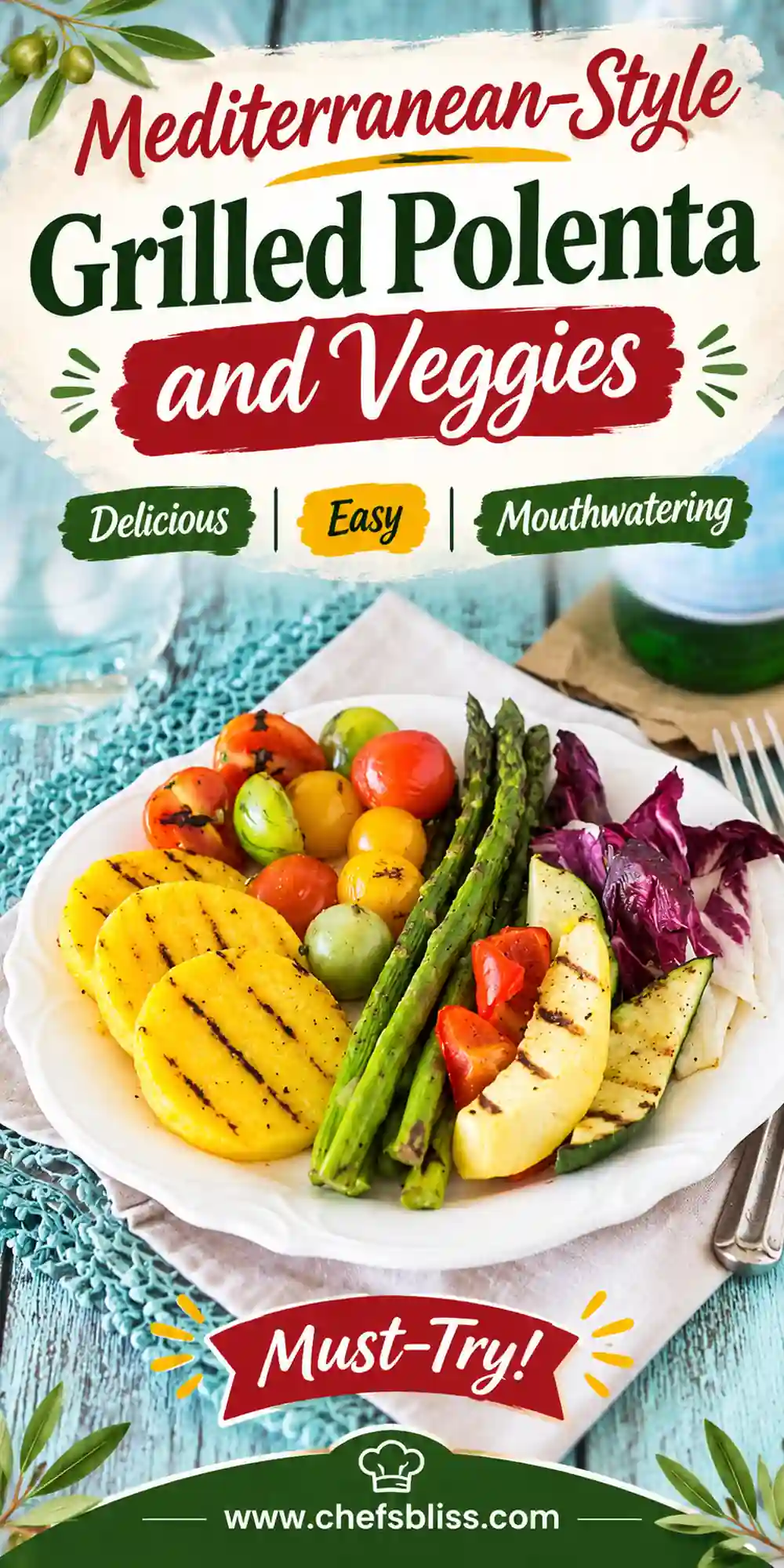
Grilled polenta and veggies bring together golden cornmeal rounds, colorful seasonal produce, and the irresistible smoky flavor of grilled vegetables.
The polenta develops a lightly crisp exterior while remaining tender inside, creating a satisfying foundation for juicy tomatoes, asparagus, sweet bell peppers, and summer squash.
Using precooked polenta makes this dish especially convenient.
There is no need to simmer cornmeal, wait for it to set, or prepare a complicated sauce.
Everything comes together with fresh vegetables, olive oil, and simple seasonings.
Serve it as a light vegetarian dinner, an elegant outdoor lunch, or a colorful addition to a backyard barbecue.
Finish with crumbled feta for a salty, tangy contrast, or leave it off for an entirely plant-based meal.
What Makes Grilled Polenta So Delicious?
Polenta has a mild, earthy corn flavor that complements vegetables without overwhelming their natural sweetness.
Grilling introduces toasted notes and a firmer exterior, giving each slice an appealing contrast in texture.
The combination of vegetables makes this dish particularly interesting. Tomatoes provide acidity and juiciness, squash adds tenderness, bell pepper contributes sweetness, and radicchio introduces a pleasantly bitter finish.
It is also naturally adaptable to vegetarian, vegan, and gluten-free cooking, provided the packaged ingredients meet your dietary requirements.
Choosing Polenta for Grilling
For this recipe, use firm, precooked polenta sold in a tube rather than dry cornmeal or freshly prepared creamy polenta.
Tubed polenta is already cooked and set, allowing it to hold its shape when sliced and handled on the grill. An approximately 18-ounce package provides enough polenta for four servings.
Divide the tube into 12 evenly sized rounds. Keeping the slices uniform helps them cook consistently and makes portioning straightforward.
Brush both surfaces with olive oil before grilling. The oil encourages browning and helps reduce sticking.
Ingredients and Their Roles
The Polenta
– Precooked polenta: Provides a tender, substantial base with a delicate corn flavor that becomes richer when grilled.
The Fresh Vegetables
- Heirloom tomatoes: Offer brightness, sweetness, and natural juices. Cherry or grape tomatoes also work well.
- Asparagus: Adds an earthy, grassy flavor and a contrasting texture.
- Zucchini: Becomes tender and develops mild caramelized notes.
- Yellow squash: Adds delicate sweetness and attractive color.
- Red bell pepper: Develops a sweeter, more concentrated flavor when exposed to heat.
- Radicchio: Introduces subtle bitterness that balances the sweeter vegetables.
Seasonings and Finishing Ingredients
- Olive oil: Coats the ingredients and supports even browning.
- Salt and black pepper: Enhance the natural flavors of the vegetables and polenta.
- Crumbled feta cheese: An optional topping that contributes creamy texture and tangy, salty flavor.
Kitchen Equipment
You do not need specialized equipment beyond a suitable grilling surface.
- Stovetop grill pan or outdoor barbecue grill
- Sharp kitchen knife
- Cutting board
- Pastry or basting brush
- Cooking tongs
- Flat spatula
- Serving plates
A spatula is particularly useful for turning the polenta without breaking the rounds.
How to Make Grilled Polenta and Veggies
Step 1: Prepare the Polenta and Vegetables
Remove the polenta from its packaging and divide it into 12 rounds.
Trim the asparagus, halve the zucchini and yellow squash lengthwise, and remove the seeds from the halved bell pepper. Divide the radicchio into quarters as specified in the ingredient preparation.
Leave small tomatoes whole and halve larger ones.
Keeping the squash and pepper in larger pieces initially makes them easier to handle during grilling.
Step 2: Heat the Grill and Apply the Oil
Bring a grill pan to medium heat, or use an outdoor barbecue grill.
Lightly coat the vegetables and both sides of every polenta round with olive oil. Aim for an even coating rather than allowing excess oil to accumulate.
Step 3: Grill Until Lightly Charred
Arrange the vegetables and polenta on the heated cooking surface.
Grill until distinct marks develop, allowing approximately 10 minutes for the first side according to the original method. Turn the ingredients and continue cooking until the opposite surfaces develop grill marks.
Watch the vegetables individually. Radicchio can cook more rapidly than the other produce and may need to be removed earlier.
Step 4: Assemble the Plates
Chop the grilled zucchini, squash, and bell pepper into serving-size pieces.
Arrange three polenta rounds on each plate and distribute the grilled vegetables evenly among the four portions.
Add crumbled feta, if desired, and serve. An optional finishing drizzle of olive oil or balsamic vinaigrette can provide additional richness or acidity.
Recognizing When the Vegetables Are Ready
Rather than expecting every vegetable to finish simultaneously, pay attention to its individual appearance and texture.
| Ingredient | Suggested doneness indicators |
|---|---|
| Polenta | Defined grill marks and a firm, lightly toasted surface |
| Tomatoes | Slightly softened with lightly blistered skins |
| Asparagus | Tender but not excessively limp |
| Zucchini | Tender flesh with browned surfaces |
| Yellow squash | Softened with visible grill marks |
| Red bell pepper | Tender flesh with lightly charred areas |
| Radicchio | Wilted outer leaves with lightly browned edges |
These additional visual cues are general grilling guidance and can help you judge doneness when cooking times vary.
Practical Tips for Better Grilled Polenta
Allow the cooking surface to heat properly. Placing polenta on an insufficiently heated surface can make it more difficult to achieve attractive grill marks.
Avoid turning the polenta prematurely. Give the rounds sufficient time to develop a firmer surface before attempting to lift them.
Keep the vegetable pieces manageable. Larger pieces of squash and pepper are easier to turn and can be chopped afterward.
Avoid overcrowding. Leave enough space to turn the ingredients comfortably. Work in batches if your grill pan is small, allowing additional cooking time as needed.
Monitor the radicchio carefully. Its thin leaves can brown considerably faster than thicker vegetables.
Season thoughtfully. If finishing the dish with feta, remember that the cheese already contributes saltiness.
Seasonal Vegetable Variations
One advantage of grilled polenta is its compatibility with different vegetables.
The following are optional, untested adaptations rather than changes to the original recipe:
- Spring: Try fennel or green onions alongside asparagus.
- Summer: Substitute eggplant or additional sweet peppers for some of the squash.
- Fall: Experiment with sliced mushrooms or thinly cut winter squash.
- Mediterranean-inspired: Finish with fresh basil, parsley, or a small drizzle of balsamic glaze.
- Vegan: Omit the feta cheese without changing the remaining ingredients.
- Gluten-free: Check the prepared polenta and any optional dressing for gluten-containing ingredients or cross-contact warnings.
Different vegetables may require adjustments to preparation and cooking time.
Turning Grilled Polenta into a Complete Meal
The combination of cornmeal and vegetables makes a lovely light meal on its own. For a more substantial dinner, consider serving it alongside a protein-rich accompaniment.
White bean salad, grilled tofu, lentils, or seasoned chickpeas are excellent plant-based pairings. Grilled chicken or fish can also complement the vegetables for a nonvegetarian meal.
Rustic Italian bread, a fresh arugula salad, or a simple cucumber salad works particularly well when serving the dish outdoors.
For entertaining, arrange the polenta rounds and grilled vegetables on a large platter rather than individual plates, allowing guests to serve themselves.
Preparing Ahead, Storing, and Reheating
The original recipe does not specify storage or reheating instructions. The following recommendations are general guidance for cooked polenta and vegetables.
Make-Ahead Preparation
Slice the polenta and prepare the vegetables several hours before cooking. Keep them covered and refrigerated until needed.
Apply the olive oil shortly before grilling.
Refrigerating
Transfer leftovers to airtight containers and refrigerate within two hours of cooking. Store for up to three to four days.
Keeping the polenta and vegetables in separate containers can help minimize moisture transfer.
Reheating
Warm the polenta in a lightly oiled skillet over medium heat until heated through. Reheat the vegetables separately or alongside the polenta when space allows.
A microwave is convenient, although the polenta may lose some of its toasted exterior.
Freezing
Freezing the assembled dish is not recommended for optimal texture. Tomatoes, zucchini, and yellow squash can become watery after thawing, while polenta may develop a grainier consistency.
Frequently Asked Questions
Can I make grilled polenta without an outdoor grill?
Yes. A stovetop grill pan is suitable for preparing the entire recipe and is one of the cooking methods specified in the original.
Can I use homemade polenta?
Firm, thoroughly chilled homemade polenta may work as an alternative. However, it requires additional preparation and chilling, and its firmness must be sufficient to withstand grilling.
The original recipe uses commercially prepared polenta.
Is grilled polenta vegan?
Plain polenta and the vegetables can be entirely plant-based. Omit the optional feta and verify that the packaged polenta contains no animal-derived ingredients.
Why is my polenta sticking to the grill?
An inadequately heated cooking surface, insufficient oil, or turning the slices too early can contribute to sticking. Coat both sides with oil and allow the exterior to firm before turning.
Can I serve grilled polenta cold?
Although it can be served chilled when properly stored, serving it warm offers a more appealing contrast between the toasted exterior and tender interior.

Mediterranean-Style Grilled Polenta and Veggies
Ingredients
Equipment
Method
- Preheat a stovetop grill pan over medium heat. Alternatively, prepare an outdoor barbecue grill.
- Brush olive oil over both sides of the polenta rounds and coat all the prepared vegetables.
- Transfer the polenta and vegetables to the grill. Cook for approximately 10 minutes, or until grill marks appear on the first side.
- Turn the polenta and vegetables and continue grilling until the opposite sides are marked. Check the ingredients periodically, removing the radicchio earlier if it finishes before the other vegetables.
- Transfer the cooked zucchini, yellow squash, and bell pepper to a cutting board. Chop them into your preferred serving-size pieces.
- Arrange three polenta rounds on each of four plates. Divide the grilled vegetables equally among the portions.
- Adjust the seasoning with salt and black pepper to taste. Sprinkle with optional feta cheese and serve. If desired, finish with a light drizzle of olive oil or balsamic vinaigrette.
Notes
-
Use firm, precooked tubed polenta rather than soft, freshly cooked polenta.
-
The original recipe does not specify exact quantities for olive oil, salt, pepper, or feta cheese.
-
Cherry and grape tomatoes are suitable alternatives to heirloom tomatoes.
-
Keep the squash and bell pepper in larger pieces during grilling to make turning easier.
-
Radicchio may finish cooking before the remaining vegetables.
-
Omit the feta cheese for a vegan meal.
-
Verify packaged ingredients when preparing the recipe for someone with gluten-related dietary restrictions.
-
The source lists a 15-minute cooking time but directs approximately 10 minutes of grilling before turning and repeating on the opposite side. Actual cooking time may therefore exceed the listed duration.
-
The source includes salt and pepper in its ingredients without specifying when to add them. Seasoning during final assembly is an editorial clarification.
-
Course and cuisine classifications are editorial additions.
-
Refrigerate leftovers in airtight containers for up to three to four days.
